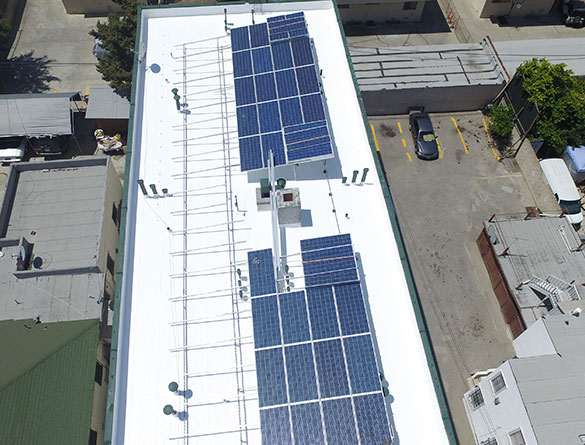
Commercial property owners and managers in Walnut face specific challenges regarding roof maintenance, primarily due to UV exposure and the eventual degradation of traditional roofing materials. American High Tech Roof Coatings Inc. specializes in the application of high-solids silicone roof coatings, a fluid-applied system designed to restore and waterproof existing roof substrates without the need for a tear-off.
Silicone Roof Coating (SRC) involves applying a silicone-based membrane over an existing roof surface. This creates a monolithic, seamless layer that seals penetrations, protects against weathering, and reflects solar heat. This text outlines the technical specifications, economic benefits, and application parameters for stakeholders considering this method of roof restoration.
Suitable Roof Types for Silicone Application
Silicone coatings are engineered to adhere to a wide variety of existing roof surfaces. The chemistry of silicone allows it to bond effectively provided the substrate is properly cleaned and primed where necessary. American High Tech Roof Coatings Inc. evaluates the following roof types for eligibility:
- Metal Roofs: Silicone arrests rust and seals seams, fasteners, and overlaps where leaks typically originate.
- Single-Ply Membranes: Aged TPO, PVC, and EPDM roofs often experience seam failure or shrinkage. Silicone encapsulates the entire sheet, eliminating seam reliance.
- Modified Bitumen and Built-Up Roofs (BUR): These asphalt-based roofs can be coated to stop the leaching of oils and prevent cracking from UV degradation.
- Spray Polyurethane Foam (SPF): Silicone acts as the protective shell for SPF roofs, shielding the foam from physical damage and UV rays.
Ideal Commercial Candidates in Walnut
The layout and usage of a building determine the viability of a coating system. In Walnut, facilities with large, flat, or low-slope surface areas benefit most from this application. American High Tech Roof Coatings Inc. frequently services the following building categories:
- Industrial Warehouses and Distribution Centers: These facilities often have expansive metal or cap sheet roofs where temperature control is vital for inventory and employee safety.
- Retail Shopping Centers: Minimizing disruption to tenants and customers during roof work is a priority. Coating application generates minimal noise and fumes compared to replacement.
- Office Parks: Multi-story buildings with HVAC units on the roof benefit from the self-flashing nature of liquid silicone, which easily seals around complex equipment curbs.
- Medical Facilities: The lack of debris and heavy machinery ensures that sensitive operations continue without interruption.
Restoration vs. Re-Roofing: A Comparison
When an existing commercial roof nears the end of its warranty or service life, owners must decide between full replacement and restoration. The following table provides a direct comparison between installing a new roof system and applying a silicone coating system.
| Factor | Full Roof Replacement (Tear-Off) | Silicone Roof Coating (Restoration) |
|---|---|---|
| Cost | High labor and material costs. Dump fees for old materials. | Typically 50% to 70% less than replacement. |
| Project Duration | Weeks to months depending on square footage. | Days to weeks. Faster application time. |
| Operations Impact | High noise, heavy equipment, potential facility closure. | Minimal noise, non-intrusive, facility remains open. |
| Waste Generation | Significant contribution to landfills (old insulation/membrane). | Zero landfill waste. Existing material remains in place. |
| Permitting | Requires extensive permitting and code upgrades. | Often classified as maintenance; simplified permitting. |
Cost-Benefit Analysis for Property Owners
Investing in a silicone roof coating system offers financial advantages beyond the immediate savings on installation. Property managers should consider the total cost of ownership when evaluating proposals.
Energy Efficiency and Utility Reduction
Silicone is highly reflective. Standard grey or black roofs absorb distinct amounts of solar heat, transferring that thermal load into the building. White silicone coatings reflect up to 88% of UV rays. This reduces the workload on HVAC systems, lowering cooling costs during the warm Walnut summers.
Tax Advantages and Accounting
Roof restoration is frequently categorized as a maintenance expense rather than a capital improvement. Under current tax codes, maintenance expenses can often be deducted in the single tax year the work is performed. Conversely, a new roof is a capital asset that must be depreciated over 39 years. Consult a tax professional to verify eligibility for Section 179 deductions.
Weather Considerations and Ponding Water
Walnut experiences high temperatures and seasonal rainfall. Roofs must withstand thermal shock, the expansion and contraction caused by rapid temperature changes, and water accumulation.
Resistance to Ponding Water
Many acrylic coatings break down under standing water. Silicone is chemically unique because it creates a non-sacrificial membrane that resists ponding water. It does not absorb moisture, meaning it will not degrade, bubble, or peel if water sits on the roof for extended periods after rain. This feature is critical for flat roofs with imperfect drainage slopes.
UV Stability
Silicone is inorganic. It does not contain carbon chains that break down under ultraviolet exposure. This prevents the coating from becoming brittle or chalky over time, maintaining flexibility even after years of direct sun exposure.
Extending Roof Life by 20 Years
The application of a silicone roof coating can extend the service life of an existing roof by up to 20 years. American High Tech Roof Coatings Inc. installs systems based on millage (thickness). A higher volume of solids applied to the roof correlates to a longer warranty period.
Once the initial warranty period nears expiration, a silicone roof can often be washed and recoated with a new layer of silicone. This renews the warranty and protection without requiring a tear-off. This cycle allows property owners to maintain the same roof substrate indefinitely, provided the structure remains sound.