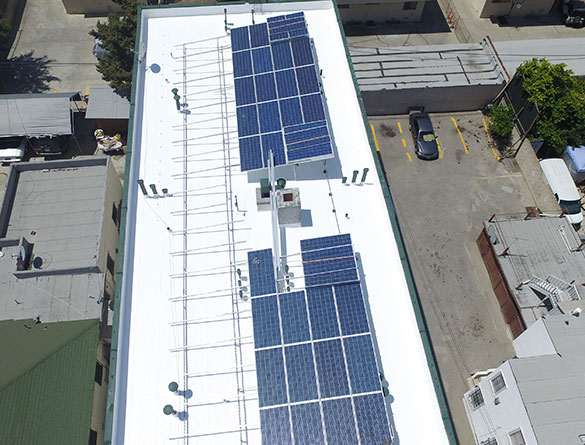
For commercial property owners and facility managers in Redondo Beach, maintaining a watertight flat roof is a critical operational requirement. American High Tech Roof Coatings Inc. provides silicone roof coating systems designed to restore existing roof substrates rather than replacing them. This process involves applying a high-solids silicone liquid that cures into a seamless, monolithic membrane. This membrane covers seams, penetrations, and fasteners, which are the most common failure points on commercial roofs.
This technical guide outlines the specific utility, economic parameters, and performance characteristics of silicone restoration systems for buildings in the South Bay area.
Commercial Roof Substrates Suitable for Silicone
Silicone roof coatings act as a restoration membrane. They require a sound underlying structure but adhere effectively to a wide range of existing commercial roof materials. The chemical composition of silicone allows it to bond to surfaces that other coatings, such as acrylics, may struggle to adhere to.
The following roof types are candidates for this restoration method:
- Modified Bitumen (Mod-Bit): Granulated or smooth surfaces can be coated to stop bitumen bleed-out and heat absorption.
- Built-Up Roofing (BUR): Gravel surfaces can be coated after a specific preparation process involving spudding or vacuuming loose aggregate.
- Single-Ply Membranes (TPO, PVC, EPDM): Aged membranes that have begun to crack or chalk can be sealed to prevent leaks and extend service life.
- Spray Polyurethane Foam (SPF): Silicone protects foam roofs from UV degradation and physical damage.
- Metal Roofs: Silicone seals seams and fasteners, preventing rust and stopping leaks caused by thermal expansion and contraction.
Weather Considerations for Redondo Beach Facilities
Redondo Beach presents specific environmental conditions that dictate material selection. The coastal location exposes roofing systems to consistent salt air, morning marine layers, and high UV exposure during midday.
Ponding Water Resistance
Flat roofs in Redondo Beach frequently experience ponding water (water that remains on the roof for more than 48 hours). Acrylic coatings often re-emulsify and wash away under standing water. Silicone is non-sacrificial and chemically stable. It withstands permanent ponding water without breaking down, making it the standard requirement for flat roofs with less than perfect drainage.
UV Stability and Reflectivity
Standard asphalt roofs absorb heat, leading to thermal shock and higher internal building temperatures. High-solids silicone is white and highly reflective. It reflects up to 88 percent of the sun's UV rays. This reduces the surface temperature of the roof, minimizes thermal expansion and contraction cycles that tear roof seams, and lowers cooling loads for the building.
Buildings Best Suited for Silicone Restoration
The application process of silicone coating is quiet and low-odor compared to roof replacement. This makes it particularly suitable for buildings that must remain fully operational during the project. American High Tech Roof Coatings Inc. identifies the following facility types as ideal candidates:
- Retail Centers and Strip Malls: Prevents disruption to tenants and customers during business hours.
- Cold Storage and Warehouses: The reflective nature of the coating aids in temperature control for sensitive inventory.
- Apartment Complexes and HOAs: Eliminates the noise and debris associated with tear-offs, reducing tenant complaints.
- Office Parks and Medical Buildings: Maintains professional appearance and prevents HVAC intake of asphalt fumes.
Cost Analysis: Coating vs. Re-Roofing
Silicone restoration is a maintenance expense rather than a capital improvement in many accounting contexts, though tax professionals should be consulted regarding Section 179 deductions. The primary financial advantage lies in the avoidance of tear-off costs and landfill fees.
A complete roof replacement involves removing the existing insulation and membrane, transporting debris to a landfill, and purchasing entirely new decking and insulation materials. Silicone coating utilizes the existing insulation and deck, applying a new waterproofing layer over the top.
| Cost Factor | Traditional Re-Roofing | Silicone Roof Coating |
|---|---|---|
| Labor Intensity | High (Demolition and Installation) | Low (Cleaning and Application) |
| Material Costs | High (Insulation, Membrane, Fasteners) | Moderate (Liquid Silicone) |
| Landfill Fees | Significant expense per ton | Zero (No tear-off required) |
| Building Downtime | Potential closures required | None (Business as usual) |
| Permitting Speed | Complex and slow | Streamlined |
Longevity and Life Extension
A properly installed silicone roof coating system extends the life of an existing roof by 10 to 20 years, depending on the thickness of the application (measured in dry mils). Manufacturers offer warranties ranging from 10 to 20 years based on material quantity.
Renewability
Once the warranty period expires, the silicone membrane can often be cleaned and recoated with a fresh layer of silicone. This resets the warranty and extends the roof's life for another term. This cycle allows property owners to defer total roof replacement indefinitely, provided the underlying structure remains dry and stable.