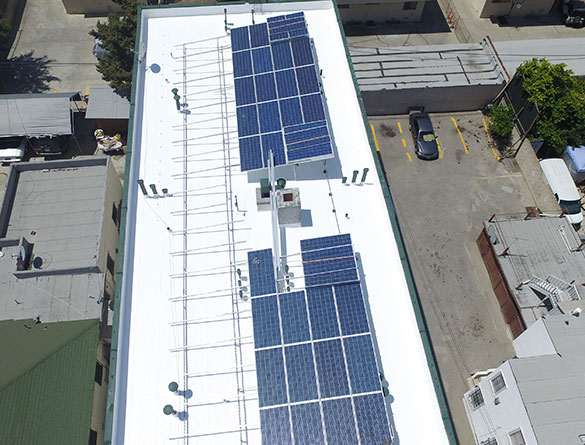
American High Tech Roof Coatings Inc. provides commercial roof restoration services using high-solids silicone coatings. For building owners and property managers in Pomona, silicone restoration serves as an alternative to complete roof replacement. This process involves applying a liquid-based silicone membrane over an existing roof system to extend its service life, improve waterproofing, and increase energy efficiency. The following information outlines technical specifications, suitable applications, and cost analyses relevant to Pomona commercial properties.
Commercial Roof Types Suited for Silicone
Silicone roof coatings are chemically formulated to adhere to a wide variety of existing roof surfaces. American High Tech Roof Coatings Inc. evaluates the condition of the substrate to ensure adhesion. The following commercial roofing systems are candidates for silicone restoration:
- Metal Roofs: Silicone prevents rust and seals seams where leaks commonly occur due to thermal expansion and contraction.
- Single-Ply Membranes (TPO and EPDM): Aged TPO and EPDM often suffer from seam delamination and UV degradation. Silicone creates a seamless layer over these membranes.
- Modified Bitumen and Built-Up Roofs (BUR): Granulated surfaces can be coated to stop the degradation of the bitumen layers.
- Spray Polyurethane Foam (SPF): Silicone protects the foam from UV damage and physical wear.
Roofs with saturated insulation or structural damage require repair prior to coating. An infrared moisture scan typically determines if the substrate is dry enough for a coating application.
Pomona Weather and Environmental Considerations
The climate in Pomona presents specific challenges for commercial roofing materials. High solar gain during summer months and concentrated rainfall during the wet season dictate the performance requirements of a roof system.
UV Stability and Reflectivity
Pomona experiences high levels of ultraviolet radiation. Traditional asphalt-based roofs absorb heat, leading to premature aging and increased cooling loads for the building. High-solids silicone is white and reflective. It reflects up to 88% of UV rays, keeping the roof surface significantly cooler. This reflectivity reduces thermal shock (the expansion and contraction of materials) and lowers energy consumption for HVAC systems.
Ponding Water Resistance
Many flat roofs in the region develop low spots where water accumulates after rain. Unlike acrylic coatings, which re-emulsify and degrade under standing water, silicone is non-sacrificial and hydrophobic. It withstands ponding water indefinitely without breaking down. This characteristic makes it the preferred material for flat or low-slope roofs in areas with variable drainage efficiency.
Cost Comparison: Restoration vs. Replacement
Property managers often weigh the decision between tearing off an old roof or restoring it. Silicone coating is a restoration method that eliminates the labor and disposal costs associated with tear-offs.
A complete roof replacement requires removing existing materials, repairing the deck, and installing new insulation and membranes. This process is labor-intensive and generates significant landfill waste. In contrast, silicone restoration utilizes the existing roof structure.
| Cost Variable | Full Roof Replacement | Silicone Roof Restoration |
|---|---|---|
| Labor Intensity | High (Demolition and Installation) | Low (Cleaning and Application) |
| Material Costs | High (Insulation, Membrane, Fasteners) | Moderate (Primer and Silicone) |
| Landfill Fees | Significant expense per ton | None (Existing roof remains) |
| Business Disruption | High (Noise, Debris, Safety Hazards) | Minimal (Low noise, non-intrusive) |
| Permitting Speed | Slower (Complex inspections) | Faster (Maintenance permit) |
Tax Advantages and Capital Expenditure
The financial classification of the project impacts the bottom line for commercial building owners. A full roof replacement is generally considered a capital improvement. This requires the asset to be depreciated over a standard 39-year schedule. Silicone roof coating is frequently classified as building maintenance. Under current tax codes, maintenance expenses can often be fully deducted in the first year of the project. American High Tech Roof Coatings Inc. recommends consulting with a tax professional to verify specific eligibility for Section 179 deductions.
Businesses and Buildings Best Suited for Coating
The application process is low-impact, making it suitable for businesses that cannot afford operational downtime. The following facilities in Pomona benefit most from this non-intrusive method:
- Warehouses and Distribution Centers: Large surface areas make tear-offs cost-prohibitive. Coating provides a cost-effective seal.
- Retail Centers and Strip Malls: Avoiding noise and debris is essential to keeping tenant shops open and customers safe.
- Medical Offices and Clinics: Silicone application produces low VOCs compared to hot-applied asphalt, preventing odor intrusion into sensitive environments.
- Office Parks: The reflective nature of the coating aids in maintaining consistent internal temperatures for occupants.
Longevity and Warranty
A professionally installed silicone system by American High Tech Roof Coatings Inc. extends the life of an existing roof by 10 to 20 years. The thickness of the application determines the warranty length. A standard application creates a monolithic membrane that seals the entire roof surface.
At the end of the warranty period, the silicone surface can be cleaned and recoated. This recoating process renews the warranty and adds another decade or more of service life. This cycle allows a roof system to remain functional indefinitely without the need for a full tear-off, provided the underlying structure remains sound.