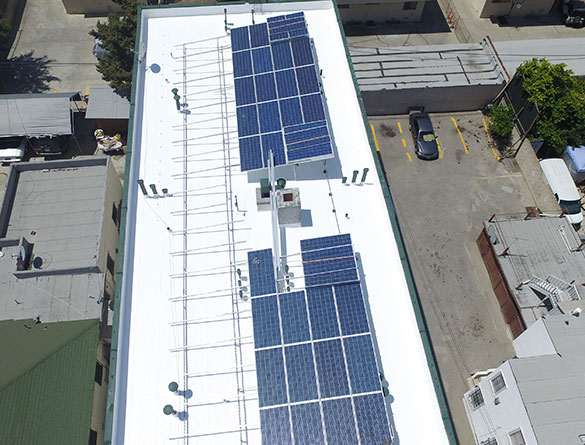
Commercial property owners and facility managers in Malibu face unique challenges regarding roof maintenance. The coastal environment exposes roofing membranes to consistent salt air, high ultraviolet radiation, and significant thermal fluctuations. American High Tech Roof Coatings Inc. specializes in the application of High-Solids Silicone Roof Coatings, a restoration method designed to extend the utility of existing roof structures without requiring a complete tear-off.
Silicone Roof Coating (SRC) is a fluid-applied system that cures into a seamless, hydrophobic membrane. Unlike acrylic coatings which are water-based and can degrade under ponding water, silicone is moisture-cured and solvent-free. This chemical structure makes it suitable for flat or low-slope roofs prevalent in Malibu commercial districts, offering protection against leaks and weathering.
Roofs Suited for Silicone Restoration
Silicone coating is an overlay system. It requires a sound underlying substrate to function correctly. This process is generally classified as roof restoration rather than roof replacement. American High Tech Roof Coatings Inc. evaluates the existing surface to ensure adhesion and structural integrity before application.
The following commercial roof types are candidates for silicone coating application:
- Modified Bitumen (Mod-Bit): Aged bitumen roofs often exhibit cracking or "alligatoring." Silicone fills these imperfections and stops granule loss.
- Single-Ply Membranes (TPO and EPDM): As these membranes weather, seams often separate. Silicone encapsulates the seams and protects the membrane from further UV degradation.
- Built-Up Roofs (BUR): Smooth-surface BUR systems accept silicone well, sealing the multiple layers against water intrusion.
- Metal Roofing: Silicone prevents rust progression and seals fasteners and horizontal seams, which are common leak points in metal systems.
- Spray Polyurethane Foam (SPF): Silicone is the standard topcoat for SPF roofs to protect the foam from UV damage.
Malibu Weather Considerations and Silicone Performance
The geographic location of Malibu dictates specific performance requirements for roofing materials. The proximity to the ocean introduces salinity into the air, which accelerates the corrosion of metal components and the oxidation of asphalt-based roofs.
Ultraviolet Resistance
Southern California receives high levels of sunlight. Traditional dark roofs absorb heat, leading to thermal expansion and contraction. This movement causes seams to split over time. High-solids silicone is highly reflective. It reflects up to 88% of UV rays, keeping the roof surface cooler and reducing the thermal shock that degrades roofing materials.
Hydrophobic Properties and Ponding Water
Flat roofs in Malibu often struggle with drainage, leading to ponding water (water that remains on the roof for more than 48 hours). Acrylic coatings tend to re-emulsify or peel under standing water. Silicone is inorganic and naturally water-repellent. It maintains its adhesion and warranty validity even in areas where water accumulates, making it a viable solution for flat commercial roofs with imperfect slopes.
Cost Benefit Analysis: Restoration vs. Replacement
Opting for a silicone restoration system offers distinct financial advantages compared to a full roof replacement. The primary cost savings come from labor reduction and waste management. A restoration project avoids the labor-intensive process of removing the old roof and the fees associated with hauling debris to landfills.
Tax Classification and Maintenance
From an accounting perspective, roof restoration is often classified as maintenance rather than a capital improvement. Under current tax codes, maintenance expenses can often be deducted in the single tax year the work is performed. Conversely, a full roof replacement is considered a capital asset that must be depreciated over 39 years. Property owners should consult their tax professionals to confirm eligibility for Section 179 deductions relative to roof restoration.
Comparison: Silicone Coating vs. Re-Roofing
The following table outlines the operational and financial differences between restoring a commercial roof with silicone and performing a complete tear-off and replacement.
| Factor | Silicone Restoration | Full Roof Replacement |
|---|---|---|
| Project Cost | Typically $4.00 to $8.00 per sq. ft. | Typically $12.00 to $25.00+ per sq. ft. |
| Business Disruption | Minimal. No heavy machinery or loud demolition. | Significant. Noise, dust, and potential facility closure. |
| Debris & Landfill | Near zero waste produced. | Thousands of pounds of waste sent to landfills. |
| Permitting Speed | Faster approval process. | Complex permitting and inspections required. |
| Risk of Leaks During Work | Low. The roof remains watertight during application. | High. Building is exposed once the old roof is removed. |
Longevity and Warranty: Extending Roof Life by 20 Years
Silicone roof coatings are specified by thickness, measured in mils. The volume of material applied directly correlates to the length of the manufacturer warranty available. American High Tech Roof Coatings Inc. applies coatings to meet specific warranty milestones.
- 10-Year Warranty: Requires a lower volume of solids, typically resulting in a dry film thickness of roughly 20 mils.
- 20-Year Warranty: Requires a higher volume of material to achieve a thicker dry film layer.
Once the warranty period expires, a silicone roof can often be recoated. This involves cleaning the surface and applying a new topcoat, which renews the warranty for another term. This renewable lifecycle allows a roof to remain functional for decades beyond its initial design life without ever requiring a full tear-off.
Businesses and Buildings Best Suited for Service
In the Malibu area, specific building types benefit most from the reflective and protective properties of silicone. American High Tech Roof Coatings Inc. services a variety of commercial sectors:
Retail Shopping Centers
Retail spaces require continuity of business. The low-noise installation of silicone coating prevents disruption to tenants and customers. The reflective white surface can also lower HVAC energy consumption, reducing overhead costs for owners or tenants.
Warehouses and Storage Facilities
Large open-span buildings often lack substantial insulation. A white silicone roof reduces internal temperatures significantly, protecting temperature-sensitive inventory and improving comfort for workers.
Condominiums and HOAs
Multi-family residential properties often have flat roofs with numerous HVAC penetrations. Silicone creates a self-flashing seal around vents, skylights, and air conditioning units, which are statistically the most common points of failure in these buildings.