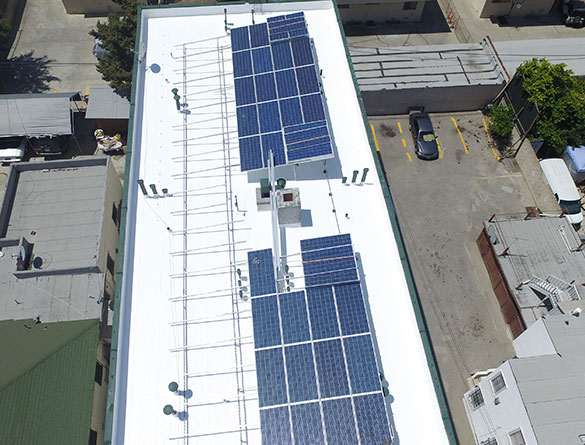
American High Tech Roof Coatings Inc. provides commercial roof restoration services using high-solids silicone coating systems. For property owners and managers in Lomita, this process serves as an alternative to complete roof replacement. Silicone roof coating involves applying a liquid-based silicone membrane over an existing roof substrate. Once cured, this material forms a seamless, monolithic layer that waterproofs the structure and reflects solar radiation.
The Economics of Restoration Versus Re-Roofing
Budget allocation is a primary concern for commercial facility management. A full roof replacement involves removing the existing roof system, repairing the deck, and installing new insulation and membrane layers. This process incurs significant costs related to labor, materials, and landfill fees for disposing of old roofing materials.
Silicone roof coating eliminates the need for a tear-off. American High Tech Roof Coatings Inc. cleans and prepares the existing surface, performs necessary spot repairs, and applies the silicone layer directly on top. This approach typically costs 50% to 70% less than a full tear-off and replacement. The savings come from reduced labor hours, zero landfill costs, and shorter project timelines.
Cost Benefit Analysis of Silicone Roof Coating
When evaluating the financial impact of roof restoration, property managers should consider immediate capital expenditure and long-term operational savings. The following table outlines the comparative metrics between silicone restoration and traditional replacement.
| Cost Factor | Silicone Roof Restoration | Full Roof Replacement |
|---|---|---|
| Material Costs | Lower (Coating and primer only) | Higher (Insulation, membrane, fasteners, flashing) |
| Labor Intensity | Low (Spray or roll application) | High (Demolition and installation) |
| Waste Disposal | None (Sustainable solution) | High (Dumpster and landfill fees) |
| Business Disruption | Minimal (Business remains open) | High (Noise, debris, potential closures) |
| Energy Efficiency | High (Reflects up to 88% of UV rays) | Varies by material selected |
| Tax Classification | Maintenance Expense (Often fully deductible in year 1) | Capital Improvement (Depreciated over 39 years) |
Suitability: What Roofs Qualify for Silicone
Silicone roof coatings adhere well to a wide variety of commercial roofing surfaces. American High Tech Roof Coatings Inc. assesses the condition of the current roof to ensure the substrate is dry and sound before application. This system is effective for the following roof types:
- Modified Bitumen (Mod-Bit): Silicone seals the seams and prevents the granulation loss common in aging asphalt roofs.
- Built-Up Roofing (BUR): The coating encapsulates the gravel or smooth surface, stopping leaks and UV degradation.
- Single-Ply Membranes (TPO, EPDM, PVC): As these membranes age and their seams weaken, silicone creates a new waterproof barrier without requiring removal.
- Spray Polyurethane Foam (SPF): Silicone protects foam roofing from UV damage and physical wear.
- Metal Roofing: The coating seals fasteners and seams, which are common failure points, and inhibits rust development.
Target Businesses and Buildings in Lomita
Lomita contains a mix of commercial zones and residential areas where flat or low-slope roofs are prevalent. Certain building types benefit most from the reflective and waterproofing properties of silicone.
- Warehouses and Industrial Facilities: These buildings often have large roof surface areas. The cooling effect of reflective silicone can significantly lower internal temperatures, protecting inventory and reducing cooling costs.
- Retail Strip Malls: Disruption to tenants is a major concern during roofing projects. Silicone application is quiet and low-odor, allowing retail shops to operate without interruption.
- Medical Offices and Clinics: Maintaining a sealed environment is critical for healthcare facilities. The seamless nature of silicone eliminates water intrusion risks.
- Apartment Complexes and HOAs: Property managers can extend the life of carports and flat residential roofs without exhausting the reserve budget on full replacements.
Weather Considerations for the South Bay
The climate in Lomita presents specific challenges that silicone is engineered to handle. While the area enjoys a Mediterranean climate, two specific factors impact roofing materials: UV radiation and ponding water.
UV Stability: Southern California receives high levels of sunlight. Traditional asphalt roofs absorb this heat, leading to thermal shock, expansion, contraction, and eventual cracking. Silicone is inorganic, meaning it does not break down under ultraviolet rays. It remains flexible and maintains its integrity despite constant sun exposure.
Ponding Water Resistance: Lomita experiences seasonal rains that can be heavy. Flat roofs often develop low spots where water accumulates. Unlike acrylic coatings, which can re-emulsify or delaminate under standing water, silicone is a moisture-cure chemistry. It withstands ponding water indefinitely without deteriorating, making it a reliable choice for roofs with drainage issues.
Longevity: Extending Roof Life by 20 Years
A properly installed silicone roof coating system serves as a renewable roofing solution. The lifespan of the coating depends on the thickness of the application, measured in mils. American High Tech Roof Coatings Inc. structures applications to meet warranty requirements ranging from 10 to 20 years.
Standard Application: A standard application generally provides 10 to 15 years of protection. This involves cleaning, priming, and applying a specific volume of solids per square foot.
Premium Application: By increasing the mil thickness of the coating, the service life extends up to 20 years. At the end of this warranty period, the roof does not need to be replaced. It can simply be cleaned and recoated with a new layer of silicone to renew the warranty. This cycle allows a building owner to maintain the same roof substrate indefinitely, provided the underlying structure remains sound.