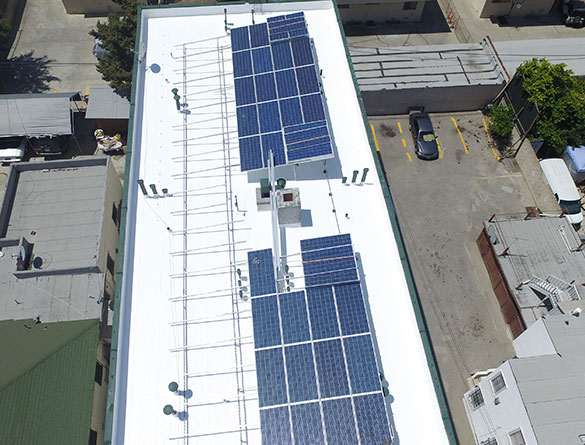
Commercial property owners and managers in La Puente face unique challenges regarding roof maintenance. The combination of intense Southern California sun and seasonal rainfall demands a roofing solution that can withstand thermal shock, resist UV degradation, and prevent water intrusion. Silicone roof coating has emerged as a primary restoration method for existing commercial roofs that are structurally sound but nearing the end of their initial service life. At American High Tech Roof Coatings Inc., we specialize in applying high-solids silicone membranes that create a seamless, waterproof barrier over your existing infrastructure.
Cost Benefit Analysis of Silicone Roof Coating
For most commercial facilities, the roof represents a significant capital asset. Replacing it entirely is a costly and disruptive process. Silicone roof coating offers a restoration model that shifts the expense from a capital improvement to a maintenance cost, which often carries different tax advantages. Beyond the immediate tax implications, the direct financial benefits are measurable.
Direct Cost Savings:
Restoration systems generally cost 50% to 70% less than a complete tear-off and re-roofing project. This reduction is due to lower material costs and significantly reduced labor hours, as there is no demolition required.
Energy Efficiency:
Silicone coatings are highly reflective, often labeled as "Cool Roofs." Standard dark commercial roofs absorb heat, transferring it into the building and increasing the load on HVAC systems. A white silicone coating reflects up to 88% of UV rays, which can reduce roof surface temperatures by as much as 50°F. This reduction translates directly to lower cooling costs during the hot La Puente summers.
Cheaper Than Re-Roofing: The Comparison
When evaluating the financial impact of restoration versus replacement, it is helpful to look at the differences in logistics and expense.
| Factor | Silicone Roof Coating (Restoration) | Traditional Re-Roofing (Replacement) |
|---|---|---|
| Cost per Sq. Ft. | Significantly lower (Material + Application) | High (Demolition + Disposal + New Material) |
| Business Disruption | Minimal; quiet application, no open roof deck | High; loud demolition, risk of exposure |
| Landfill Impact | Zero; existing roof remains in place | Heavy; tons of waste sent to landfills |
| Permitting & Speed | Faster approval and application times | Lengthy permitting and construction timelines |
What Roofs Silicone Roof Coating is Best For
Silicone is chemically unique because it is inorganic, meaning it does not break down under UV light like organic asphalt-based products. This makes it an ideal candidate for coating over various existing substrates. It creates a monolithic (seamless) membrane that adheres specifically well to:
- Metal Roofs: Silicone prevents rust and seals seams where leaks often originate due to thermal expansion and contraction.
- Modified Bitumen (Mod-Bit): It seals the granules and prevents the asphalt from drying out and cracking.
- Single-Ply Membranes (TPO & EPDM): It restores the waterproof surface of aged membranes that have started to chalk or thin.
- Built-Up Roofing (BUR): It creates a smooth surface over the gravel or smooth-surface asphalt, locking in the existing system.
- Spray Polyurethane Foam (SPF): It protects the foam from UV degradation and physical damage.
Businesses & Buildings Best Suited for Silicone Roof Coating
Certain commercial structures in La Puente benefit more from this application due to their roof surface area and HVAC usage. Large, flat-roofed buildings maximize the energy-saving potential of reflective coatings. Ideal candidates include:
- Industrial Warehouses: These large facilities often have metal or cap sheet roofs that absorb massive amounts of heat. Coating them stabilizes interior temperatures.
- Retail Shopping Centers: Minimizing disruption to tenants is critical. Silicone application allows businesses to remain open without the noise and danger of heavy construction.
- Office Buildings: Property managers can reduce Common Area Maintenance (CAM) charges related to cooling costs, making the property more attractive to tenants.
- Manufacturing Plants: Protecting sensitive equipment from water leaks is paramount. Silicone’s seamless nature eliminates the most common failure points: seams and flashings.
Weather Considerations for La Puente
La Puente experiences a semi-arid climate characterized by hot, dry summers and mild, occasionally wet winters. A roofing system here must handle two distinct extremes:
Ponding Water Resistance:
Unlike acrylic coatings, which can re-emulsify or break down under standing water, silicone is moisture-cured and non-sacrificial. It withstands "ponding water" (water that stays on the roof for more than 48 hours), which is common on flat commercial roofs after winter storms. This trait is essential for flat roofs in La Puente where drainage may not be perfect.
UV Stability:
The UV index in Southern California is high year-round. Traditional roofing materials become brittle and crack under this exposure. Silicone is permanently flexible and UV stable, meaning it will not chalk, crack, or degrade under the relentless sun, maintaining its integrity during heatwaves.
Longevity of Silicone Roof Coating: Extend Life of Your Roof by 20 Years
A professionally installed silicone roof coating system is not a temporary patch; it is a long-term membrane system. When applied correctly by American High Tech Roof Coatings Inc., a silicone restoration can extend the service life of an existing roof by up to 20 years.
This longevity is supported by the material's chemical structure. Because it does not rely on plasticizers to remain flexible, it does not become brittle with age. Furthermore, at the end of the warranty period, the roof can typically be washed and recoated with a new layer of silicone, extending the life of the roof indefinitely without ever requiring a full tear-off.