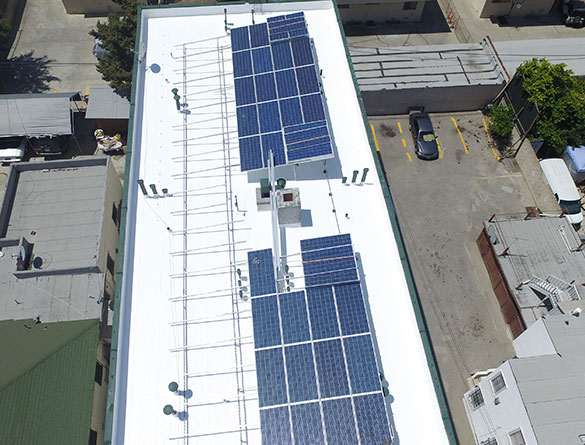
Property managers and business owners in Downey facing aging commercial roof infrastructure often encounter the decision between a complete tear-off or a restoration. American High Tech Roof Coatings Inc. specializes in silicone roof coating systems designed to restore existing waterproofing capabilities without the capital expense and operational disruption of a full roof replacement.
Silicone Roof Coating is a fluid-applied system that cures into a seamless, monolithic membrane. It is specifically engineered for flat and low-slope commercial roofs. Unlike water-based acrylics, silicone is moisture-cured and solvent-free, making it chemically resistant to standing water and ultraviolet degradation. This guide outlines the technical specifications, economic benefits, and application criteria for silicone restoration in the Downey area.
Cost Benefit Analysis: Coating vs. Replacement
The primary economic driver for choosing silicone restoration is the reduction in labor and material costs compared to traditional roofing. A restoration project utilizes the existing insulation and substrate, eliminating the labor required to remove the old roof and the fees associated with hauling debris to a landfill.
Below is a comparison of the average logistical and financial factors associated with silicone restoration versus a full roof replacement.
| Cost Factor | Silicone Restoration | Full Roof Replacement |
|---|---|---|
| Material Costs | Lower (Liquid membrane only) | High (Insulation, membrane, fasteners) |
| Labor Intensity | Low (Spray or roll application) | High (Demolition and installation) |
| Landfill/Disposal Fees | Minimal to None | Significant (Tons of waste) |
| Business Disruption | Minimal (Low noise, low odor) | High (Heavy machinery, open roof risks) |
| Tax Classification | Maintenance Expense (Expensed in 1 year) | Capital Improvement (Amortized over 39 years) |
Cheaper Than Re-Roofing
American High Tech Roof Coatings Inc. approaches restoration as a method to preserve capital. Re-roofing projects involve the complete removal of the existing assembly. This process exposes the building interior to the elements during construction and requires heavy dumpsters and significant noise. By keeping the existing roof deck and insulation in place, silicone coating projects typically cost 50% to 70% less than a total tear-off.
Furthermore, silicone restoration is generally classified as a maintenance expenditure rather than a capital improvement. This allows business owners to expense the entire cost of the project in the tax year it was completed, rather than depreciating the asset over 39 years.
Longevity: Extend the Life of Your Roof by 20 Years
Silicone coatings are inorganic. This chemical structure prevents the material from breaking down under UV exposure or extreme heat, common issues for asphalt-based roofs. A properly installed high-solids silicone system creates a barrier that halts the degradation of the underlying membrane.
Standard manufacturer warranties for silicone systems range from 10 to 20 years, depending on the thickness of the application (measured in mils). Once the warranty period expires, the roof can typically be washed and recoated to renew the warranty for another term. This renewable lifecycle allows a commercial roof to remain functional indefinitely, provided the substrate remains dry and stable.
Weather Considerations for Downey
The climate in Downey presents specific challenges for commercial roofing, primarily regarding solar radiation and seasonal rainfall. Silicone is uniquely suited to address these local environmental factors.
- UV Stability and Reflectivity: Downey experiences high solar exposure. Dark roofs absorb heat, reaching temperatures up to 180°F, which accelerates material fatigue and increases cooling loads. White silicone coatings reflect up to 88% of UV rays, keeping the roof surface near ambient air temperature. This reflectivity supports Title 24 energy compliance and reduces HVAC usage.
- Ponding Water Resistance: Flat roofs in Downey often develop low spots where water accumulates after rain. Unlike acrylic coatings, which re-emulsify and degrade under standing water, silicone is hydrophobic and non-sacrificial. It maintains adhesion and waterproofing integrity even when submerged indefinitely.
Ideally Suited Roof Types
Silicone coating is an adhesion-based solution. It requires a compatible substrate to bond effectively. American High Tech Roof Coatings Inc. performs adhesion tests prior to application to ensure viability. The following roof systems are excellent candidates for silicone restoration:
- Single-Ply Membranes: TPO, PVC, and EPDM (Rubber) roofs.
- Modified Bitumen: Granulated or smooth cap sheets.
- Built-Up Roofs (BUR): Asphalt and gravel systems (requires specific preparation).
- Metal Roofing: Standing seam or corrugated metal panels.
- Spray Polyurethane Foam (SPF): Existing foam roofs that require a new protective shell.
Businesses and Buildings Best Suited for Restoration
Commercial structures with expansive flat roof footprints benefit most from the economies of scale provided by silicone restoration. In Downey, the following facility types are frequent candidates for this service:
- Industrial Warehouses and Distribution Centers: Large square footage makes tear-off prohibitively expensive.
- Retail Shopping Centers: Restoration avoids the noise and parking lot disruption that drives away customers.
- Medical Offices and Clinics: Low-odor, low-VOC silicone allows facilities to remain open and operational during application.
- Office Parks: Energy savings from the reflective coating directly benefit property management operating budgets.
- Educational Institutions: Quick installation times allow projects to be completed during short breaks without interfering with school operations.