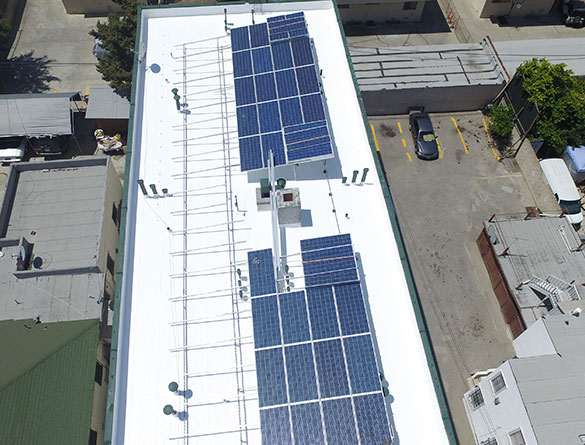
Silicone roof coating is a seamless, liquid-applied membrane used to restore and protect existing commercial roof structures. For property owners and facility managers in Bellflower, this service offers a method to waterproof and preserve a roof without the expense and disruption of a full tear-off and replacement. American High Tech Roof Coatings Inc. applies high-solids silicone formulations that cure into a durable, monolithic layer over the existing substrate.
This process addresses common roofing issues such as leaks, weathering, and energy inefficiency. By adhering directly to the existing roof surface, the coating seals penetrations and seams where leaks most often occur. The result is a renewable system that meets California Title 24 energy efficiency standards due to its high reflectivity.
Restoration vs. Replacement: A Cost Comparison
Commercial property owners often face the decision between complete roof replacement and roof restoration. Silicone roof coating falls under the category of restoration. This approach creates significant savings regarding labor, materials, and landfill waste.
The following table outlines the operational and financial differences between a full re-roofing project and a silicone restoration applied by American High Tech Roof Coatings Inc.
| Factor | Silicone Restoration | Full Roof Replacement |
|---|---|---|
| Cost Efficiency | Generally costs 50% to 70% less than replacement. | Requires high capital expenditure for labor and new materials. |
| Business Disruption | Minimal noise and no odors. Business operations continue normally. | Loud demolition noise, debris, and potential facility closure during work. |
| Project Duration | Rapid application. Often completed in days. | Lengthy process involving tear-off and installation. |
| Waste Management | Zero landfill contribution. Existing insulation is reused. | Tons of debris sent to landfills, incurring disposal fees. |
| Permitting | Often classified as maintenance, simplifying the permit process. | Requires complex building permits and strict code upgrades. |
Cost Benefit Analysis of Silicone Roof Coating
Beyond the immediate savings compared to replacement, silicone roof coatings provide ongoing financial benefits for Bellflower businesses. The primary economic advantages include energy reduction and tax incentives.
- Energy Savings: Silicone coatings are highly reflective. They reflect up to 88% of UV rays, keeping the roof surface and the building interior cooler. This reduces the workload on HVAC systems during Bellflower summers, leading to lower monthly utility bills.
- Tax Classifications: In many accounting contexts, roof restoration is classified as a maintenance expense rather than a capital improvement. This allows building owners to expense the cost in the current tax year rather than depreciating it over 39 years.
- Avoided Tear-Off Costs: Removing an old roof requires significant labor and disposal fees. Restoring the roof eliminates these line items entirely.
Suitable Roof Substrates for Silicone Coating
Silicone is chemically compatible with a wide variety of existing commercial roofing materials. American High Tech Roof Coatings Inc. conducts adhesion tests to ensure the substrate is viable. The following roof types are excellent candidates for silicone restoration:
- Metal Roofs: Silicone seals seams and fasteners, stopping rust and preventing leaks caused by thermal expansion and contraction.
- Single-Ply Membranes (TPO, EPDM, PVC): As these membranes age and weather, silicone restores their waterproofing integrity.
- Built-Up Roofs (BUR) and Modified Bitumen: Silicone creates a smooth surface over these granulated or asphalt-based systems.
- Spray Polyurethane Foam (SPF): Silicone protects the foam from UV degradation.
The roof must be structurally sound and the insulation must be dry. If moisture is detected in the insulation during inspection, those specific areas are removed and replaced before the coating is applied.
Commercial Buildings Suited for Roof Restoration
The layout and usage of a building influence the suitability of roof coating. In Bellflower, specific commercial sectors benefit most from this application due to their large flat roof surface areas and HVAC requirements.
Warehouses and Industrial Facilities: These buildings often have large metal or cap sheet roofs. Coating them reduces internal temperatures, protecting inventory and improving worker comfort without the need for air conditioning upgrades.
Retail Shopping Centers: Retail owners prioritize minimal disruption to tenants. Silicone application is quiet and fast, ensuring shops remain open.
Apartment Complexes and HOAs: Multi-family housing managers utilize silicone to extend roof life without depleting capital reserve funds on full replacements.
Bellflower Weather and Roof Performance
The climate in Bellflower presents specific challenges for roofing systems. High UV exposure throughout the year degrades asphalt and rubber roofs, causing them to crack and shrink. Silicone is inorganic, meaning it does not break down under UV rays. It maintains its flexibility and adhesion indefinitely.
Rain in Southern California, while less frequent, can be intense. Flat roofs often develop low spots where water accumulates, known as ponding water. Unlike acrylic coatings, which re-emulsify and fail under standing water, high-solids silicone is moisture-cured and withstands ponding water without deteriorating. This makes it the preferred chemistry for flat commercial roofs in the region.
Extending Roof Life by Up to 20 Years
A professionally installed silicone system by American High Tech Roof Coatings Inc. extends the service life of an existing roof by 10 to 20 years. The thickness of the coating determines the length of the warranty. Standard applications usually involve a 20-mil thickness for a 10-year warranty or a 30-mil thickness for a 20-year warranty.
Once the warranty period expires, the roof does not necessarily require replacement. The surface can be cleaned and recoated with a new layer of silicone, renewing the warranty and further extending the roof's life. This cycle allows a roof structure to remain functional for decades beyond its original design life.