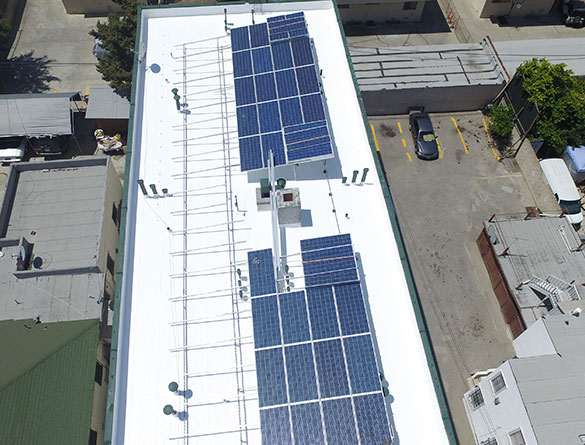
American High Tech Roof Coatings Inc. provides silicone roof coating services for commercial and industrial properties in Bell. This restorative process applies a high-solids silicone membrane over an existing roof structure. The application creates a seamless, monolithic barrier designed to stop leaks, resist ponding water, and reflect solar heat. For property managers and business owners, this service functions as a preventative maintenance measure and a capital improvement strategy that avoids the logistical challenges of a full roof tear-off.
Commercial Roof Substrates Suited for Silicone
Silicone roof coatings are chemically engineered to adhere to a wide variety of existing roof surfaces. American High Tech Roof Coatings Inc. evaluates the condition of the current roof to ensure the substrate is dry and stable before application. The following roof types generally qualify for silicone restoration:
- Metal Roofs: Silicone seals seams and fasteners where leaks commonly originate, preventing rust and inhibiting further corrosion.
- Single-Ply Membranes (TPO and EPDM): Aged TPO or EPDM roofs that have started to weather or chalk can be resurfaced to restore waterproofing capabilities.
- Modified Bitumen (Mod-Bit): Granulated surfaces accept silicone well, sealing cracks and preventing the deterioration caused by thermal cycling.
- Built-Up Roofs (BUR): Silicone encapsulates the gravel and asphalt layers, stopping the release of volatile organic compounds and locking in the existing structure.
- Spray Polyurethane Foam (SPF): Silicone acts as a protective topcoat for foam roofs, shielding the foam from UV damage.
Ideally Suited Businesses and Buildings in Bell
The industrial and commercial landscape of Bell contains specific building types that benefit most from fluid-applied restoration. Buildings with large, flat square footage and HVAC units mounted on the roof are prime candidates. The flexibility of silicone allows it to seal around vents, skylights, and pipes without the need for complex flashing work.
Warehouses and Distribution Centers
These facilities often have expansive metal or flat roofs. Coating these structures reduces internal temperatures, which protects temperature-sensitive inventory.
Retail Centers and Strip Malls
Disruption to tenants is a major concern during roofing projects. Silicone application is low-noise and low-odor, allowing businesses to remain open during the restoration process.
Manufacturing Facilities
Buildings with high energy consumption benefit from the "cool roof" properties of white silicone, which reflects sunlight and reduces the load on air conditioning systems.
Longevity: Extend the Life of Your Roof by 20 Years
A properly installed silicone roof coating system effectively pauses the aging process of the underlying membrane. By shielding the original roof from physical weathering and ultraviolet radiation, the coating absorbs the environmental wear and tear. American High Tech Roof Coatings Inc. applies these systems to provide performance durability lasting up to two decades.
Once the initial warranty period nears its end, the roof can typically be washed and recoated with a new layer of silicone. This renewability allows property owners to maintain the same roof structure indefinitely, provided the substrate remains dry and structurally sound. This cycle eliminates the need for premature capital expenditure on structural replacement.
Cheaper Than Re-Roofing: The Financial Comparison
Comparing silicone restoration to a complete re-roofing project reveals significant cost disparities. A full roof replacement involves labor-intensive tear-off, disposal fees for old materials, and the purchase of entirely new decking and insulation. Silicone coating utilizes the existing materials as a base, removing these costs from the equation.
Labor Savings: Applying a fluid system is faster and requires fewer personnel hours than ripping up and laying down new roofing sheets.
Waste Reduction: Re-roofing projects contribute heavily to landfills. Restoration generates almost no waste, eliminating dumpster rental and landfill tipping fees.
Tax Classification: In many accounting contexts, roof restoration is classified as maintenance and repair, allowing the entire cost to be expensed in the current tax year. Conversely, a roof replacement is a capital improvement that must be depreciated over 39 years. Property owners should verify this with their CPA.
Weather Considerations in Bell
The climate in Bell presents specific challenges that silicone is equipped to handle. The region experiences high UV exposure throughout the year and distinct periods of rainfall. Ultraviolet rays degrade asphalt and single-ply membranes, causing them to become brittle and crack. Silicone is inorganic, meaning it does not break down or chalk under UV exposure, maintaining its flexibility over time.
Regarding moisture, silicone is unique among roof coatings because it is non-sacrificial. It resists ponding water, water that sits on a flat roof for more than 48 hours, without breaking down. Acrylic coatings often re-emulsify and wash away under standing water, whereas silicone maintains a waterproof seal even in areas where the roof slope is imperfect.
Cost Benefit Analysis of Silicone Roof Coating
The following table outlines the operational and financial differences between choosing American High Tech Roof Coatings Inc. for a silicone restoration versus contracting a full roof replacement.
| Cost Factor | Silicone Restoration | Full Roof Replacement |
|---|---|---|
| Material Cost | Low (Liquid applied membrane only) | High (New insulation, decking, membrane) |
| Labor Intensity | Moderate (Surface prep and spray/roll) | High (Demolition and installation) |
| Disposal Fees | Zero to Minimal | Significant (Landfill per ton) |
| Business Downtime | None (Business operates as usual) | Likely (Noise and overhead hazards) |
| Energy Efficiency | High (Reflects up to 88% of UV rays) | Varies by material selected |
| Permitting Speed | Fast (Maintenance permit) | Slow (Construction permit required) |