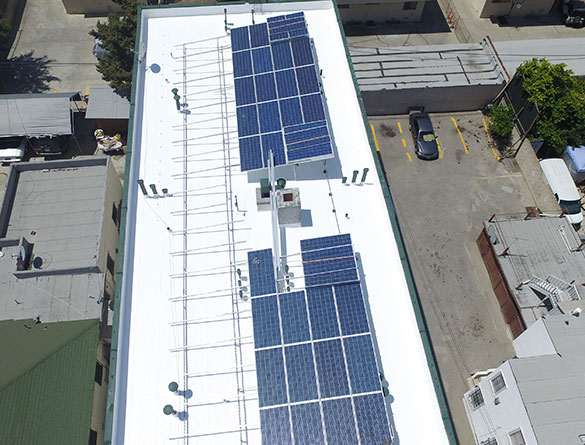
Commercial property owners and managers in Calabasas face specific challenges regarding roof maintenance due to the local climate and building codes. Silicone roof coating systems, also known as roof restoration systems, provide a method to extend the service life of an existing roof without the need for a complete tear-off and replacement. American High Tech Roof Coatings Inc. specializes in the application of high-solids silicone coatings designed to adhere to existing roof substrates, creating a seamless, waterproof membrane.
This technical guide outlines the functional benefits, application parameters, and economic considerations of silicone roof coating for commercial assets in the Calabasas area.
Commercial Roof Types Suitable for Silicone Coating
Silicone coatings are chemically engineered to bond with a wide variety of existing roof surfaces. This versatility makes them a primary option for restoring aging commercial roofs that are structurally sound but suffer from leaks, surface degradation, or compromised seams. American High Tech Roof Coatings Inc. evaluates the following substrates for compatibility:
- Single-Ply Membranes: TPO (Thermoplastic Polyolefin), EPDM (Rubber), and PVC roofs that have weathered over time.
- Modified Bitumen (Mod-Bit): Granulated or smooth asphalt-based rolled roofing.
- Built-Up Roofing (BUR): Traditional gravel and tar roofs (often requires specific preparation).
- Metal Roofing: Corrugated metal panels where coating seals fasteners and seams to stop rust and leaks.
- Spray Polyurethane Foam (SPF): Recoating existing foam roofs to protect the foam from UV degradation.
Target Businesses and Building Infrastructure
The application of silicone restoration systems is particularly effective for large-scale commercial footprints common in Calabasas. The continuous membrane eliminates seams, which are the most common failure points on flat commercial roofs. Buildings that benefit most include:
- Industrial Warehouses and Distribution Centers: Facilities with large square footage where full replacement costs are prohibitive.
- Retail Shopping Centers: Properties requiring minimal disruption to tenants during roof work.
- Office Parks and Medical Buildings: Structures where HVAC efficiency and temperature control are critical operational costs.
- HOA and Multi-Unit Residential Complexes: Management looking for long-term budget certainty and warranty protection.
Weather Considerations for Calabasas
The Calabasas climate involves high ultraviolet (UV) exposure, significant heat accumulation, and seasonal thermal shock. Roofing materials expand during the heat of the day and contract rapidly when temperatures drop at night. This movement causes traditional roofing materials to crack and separate at the seams.
Silicone is an inorganic material, meaning it does not break down under UV rays like asphalt-based products. It maintains permanent flexibility, allowing the membrane to expand and contract with the building structure without cracking. Furthermore, high-solids silicone creates a "Cool Roof." The bright white surface reflects up to 88% of solar rays, significantly reducing the heat transfer into the building. This is essential for compliance with California Title 24 energy efficiency standards.
Longevity: Extending Roof Life by 20 Years
A properly installed silicone roof coating system is not a temporary patch; it is a long-term roofing solution. When applied at the correct millage (thickness) by American High Tech Roof Coatings Inc., the system can extend the life of an existing roof by up to 20 years.
The system is renewable. At the end of the warranty period, the roof can be cleaned and recoated with a new layer of silicone to extend the warranty for another term. This cycle allows property owners to maintain the same roof substrate indefinitely, provided the structure remains dry and sound.
Comparison: Silicone Restoration vs. Total Re-Roofing
The following comparison illustrates the logistical and financial differences between restoring a roof with silicone and performing a traditional tear-off and replacement.
| Feature | Silicone Roof Coating (Restoration) | Traditional Re-Roofing (Replacement) |
|---|---|---|
| Cost Impact | significantly lower cost (labor and materials). | High cost due to demolition and new material installation. |
| Project Duration | Fast application; minimal downtime. | Lengthy process; disruptive to business operations. |
| Waste Disposal | Zero landfill contribution. | Requires dumpsters for tons of torn-off debris. |
| Permitting | Often classified as maintenance (check local codes). | Requires full building permits. |
| Building Exposure | Building remains watertight during application. | Interior exposed to elements during tear-off. |
Cost Benefit Analysis
Opting for a silicone roof coating presents measurable financial advantages beyond the immediate reduction in upfront capital expenditure.
- Energy Savings: Due to the high reflectivity of the white silicone surface, roof surface temperatures can drop by up to 50 degrees Fahrenheit compared to a black roof. This reduces the workload on HVAC units, leading to lower monthly electricity bills and extending the lifespan of air conditioning equipment.
- Tax Advantages: In many scenarios, roof restoration is classified as "maintenance" rather than a "capital improvement" for accounting purposes. This allows business owners to expense the entire cost in the current tax year rather than depreciating it over 39 years. Property owners should consult their tax professionals regarding Section 179 deductions.
- Reduced Maintenance Costs: The seamless nature of the coating eliminates the most common sources of leaks, such as flashing failures and seam separation, reducing the frequency and cost of emergency repairs.