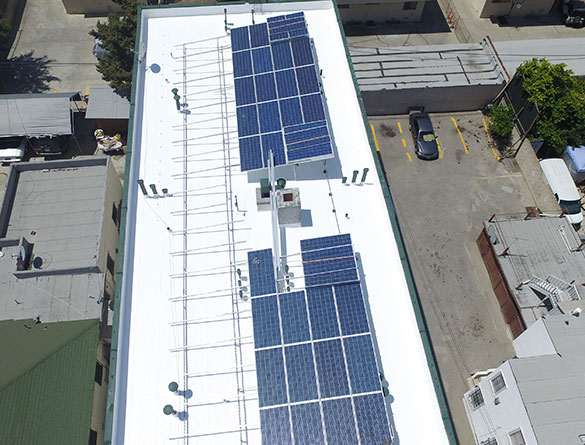
Commercial property owners and facility managers in Lynwood often face the decision of repairing an aging roof or investing in a complete replacement. Silicone Roof Coating, also known as silicone restoration, offers a fluid-applied solution that creates a seamless, water-resistant membrane over the existing roof structure. American High Tech Roof Coatings Inc. provides this service to extend the lifecycle of commercial roofs without the logistical burden of a tear-off.
Cost Comparison: Silicone Coating vs. Full Re-Roofing
Budget allocation is a primary concern for business owners. A complete roof replacement involves stripping the old roof down to the deck, hauling away debris, and installing an entirely new system. This process requires significant labor and disposal fees.
Silicone roof coating eliminates the need for demolition. The existing substrate is cleaned, repaired, and primed before the silicone is applied. This approach significantly lowers the cost per square foot. The following table outlines the financial and logistical differences between the two methods.
| Comparison Factor | Silicone Roof Coating | Full Roof Replacement |
|---|---|---|
| Material Costs | Lower (Liquid membrane only) | High (Insulation, membrane, fasteners) |
| Labor Intensity | Low (Spray or roll application) | High (Demolition and installation) |
| Landfill/Disposal Costs | Minimal to None | Significant (Disposal of old roofing) |
| Business Disruption | Minimal noise and odors | High noise and potential closure |
| Permitting Speed | Fast (Maintained as repair) | Slow (Requires complex permits) |
Cost Benefit Analysis of Silicone Roof Coating
Applying a silicone coating system provides financial benefits beyond the initial installation savings. Silicone is naturally reflective and typically white, which reflects UV rays rather than absorbing them. This cool roof effect reduces the heat transfer into the building, lowering energy consumption for air conditioning systems during Lynwood's warmer months.
From a tax perspective, a roof restoration is often classified as a maintenance expense rather than a capital improvement. Under current tax codes, maintenance expenses can often be deducted in the single tax year the work is completed, whereas capital improvements must be depreciated over 39 years. Property owners should consult with their tax professionals to confirm eligibility for Section 179 deductions regarding roof restoration.
Longevity: Extend the Life of Your Roof by 20 Years
A properly installed high-solids silicone roof coating can extend the service life of an existing commercial roof by up to 20 years. The material forms a monolithic layer that encapsulates seams, flashings, and penetrations, which are the most common failure points on flat roofs.
The system is renewable. Toward the end of the warranty period, the silicone surface can be power washed and recoated with a new layer of silicone. This allows the roof to be maintained indefinitely without ever requiring a full tear-off, provided the underlying structure remains sound.
Weather Considerations for Lynwood
Lynwood experiences significant sun exposure and periodic rainfall. Roofing materials must withstand high UV indices and thermal shock, where the roof expands and contracts due to temperature fluctuations.
Silicone is inorganic, meaning it does not degrade or chalk under UV radiation like acrylic coatings or asphalt-based products. It remains flexible indefinitely, allowing it to move with the building during thermal cycles without cracking.
Additionally, flat roofs in the area often suffer from ponding water—water that stands on the roof for more than 48 hours after rain. Most roof warranties exclude damage caused by ponding water. Silicone is moisture-cured and non-permeable, making it one of the only coating materials that can withstand ponding water without breaking down or bubbling.
Compatible Commercial Roof Types
American High Tech Roof Coatings Inc. applies silicone systems to a wide variety of existing roof substrates. The coating adheres chemically and physically to most surfaces when properly prepared. The following roof types are best suited for silicone restoration:
- Metal Roofs: Silicone seals seams and stops rust, preventing further corrosion.
- Single-Ply Membranes (TPO and EPDM): As these membranes age and shrink, silicone restores their waterproofing integrity.
- Modified Bitumen (Mod-Bit): Granulated surfaces accept silicone well, sealing cracks and preventing heat absorption.
- Built-Up Roofs (BUR): Smooth-surface BUR systems can be coated to stop leaks and reflect sunlight.
- Spray Polyurethane Foam (SPF): Silicone is the standard protective coating for SPF roofs.
Businesses and Buildings Best Suited for Coating
Silicone roof coating is an industrial-grade solution designed for large square footage. In Lynwood, specific types of properties benefit most from this application due to their roof design and HVAC requirements.
Warehouses and Industrial Facilities: These buildings often have expansive flat roofs where tear-off costs are prohibitive. The cooling effect of silicone also aids in temperature control for inventory preservation.
Retail Centers and Strip Malls: Business continuity is vital for retail tenants. The low-noise and low-odor application of silicone allows shops to remain open during the restoration process.
Office Buildings and Medical Centers: Preventing water intrusion is critical for protecting expensive equipment and documents. The seamless nature of silicone eliminates the risk of leaks at mechanical curbs and HVAC penetrations common on these rooftops.