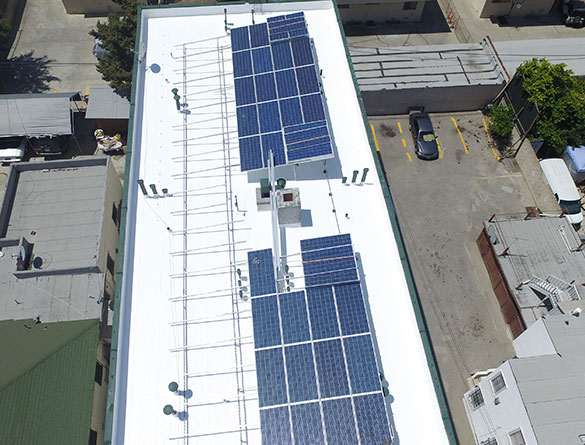
Commercial property owners and facility managers in Glendora often face distinct challenges regarding roof maintenance. The local climate, characterized by high ultraviolet exposure and seasonal rainfall, accelerates the degradation of traditional roofing materials. American High Tech Roof Coatings Inc offers silicone roof coating as a restorative solution designed to address these environmental stressors without the need for intrusive construction.
A silicone roof coating system involves applying a high-solids silicone membrane over an existing roof substrate. This creates a seamless, water-resistant barrier that halts leaks and reflects solar heat. For buildings in the San Gabriel Valley, this approach serves as a practical alternative to total roof replacement, focusing on extending the service life of the current structure.
The Financial Advantage: Coating vs. Re-Roofing
The primary economic driver for choosing silicone restoration over a complete tear-off and replacement is the reduction in labor and disposal costs. A traditional re-roofing project requires the physical removal of old insulation and membrane layers, which incurs significant labor hours and dumpster fees. Furthermore, exposing the building interior during a tear-off poses operational risks to the business below.
Silicone coating eliminates the demolition phase. The crew cleans the existing roof, repairs specific defects, and applies the coating directly to the surface. This process typically costs half to one-third of the price of a total roof replacement. Additionally, because roof restoration is classified as maintenance rather than a capital improvement, business owners can often deduct the entire cost in the first year under current tax codes, unlike replacements which are depreciated over 39 years.
Cost-Benefit Analysis
When evaluating the return on investment for a commercial roof in Glendora, specific performance metrics translate directly to operational savings. The following data highlights the comparative advantages of a silicone restoration system.
| Factor | Traditional Roof Replacement | Silicone Roof Coating |
|---|---|---|
| Upfront Cost | High (Includes tear-off, disposal, new materials) | Moderate (Labor and material only) |
| Business Disruption | High (Noise, debris, open roof risks) | Minimal (Low noise, non-intrusive) |
| Energy Efficiency | Standard (Absorbs heat unless specified cool roof) | High (Reflects up to 88% of UV rays) |
| Tax Classification | Capital Asset (Depreciated over 39 years) | Maintenance Expense (Potential immediate deduction) |
| Warranty Options | 10-20 Years | 10-20 Years (NDL Labor & Material) |
Weather Considerations for Glendora Properties
Glendora experiences a Mediterranean climate with hot, dry summers and wet winters. These conditions create specific points of failure for flat roofs that silicone is engineered to handle.
UV Stability and Energy Costs
During summer months, rooftop temperatures on a black asphalt roof can exceed 170 degrees Fahrenheit. This heat transfer forces HVAC systems to work harder, increasing electricity bills. Ultraviolet rays also cause asphalt and single-ply membranes to become brittle and crack over time. Silicone is naturally UV stable and highly reflective. By keeping the roof surface cooler, American High Tech Roof Coatings Inc helps buildings reduce internal temperatures, lowering cooling costs by approximately 15 to 35 percent depending on the building's insulation.
Resistance to Ponding Water
Flat roofs often develop low spots where water accumulates after rain. Acrylic coatings are water-based and will re-emulsify or break down if subjected to standing water for more than 48 hours. Silicone is a moisture-cure chemistry that forms an impermeable seal. It is the only coating material capable of withstanding permanent ponding water without degrading, making it essential for roofs with drainage issues typical in older commercial buildings.
Suitable Roof Substrates
Silicone coating systems are versatile and adhere well to a variety of existing commercial roof surfaces. Before application, American High Tech Roof Coatings Inc performs an adhesion test to ensure compatibility. The system is best suited for:
- Metal Roofs: Silicone seals seams and fasteners where leaks commonly occur, preventing rust and thermal shock movement.
- Single-Ply Membranes (TPO and EPDM): As these membranes age and shrink, silicone provides a protective shield that halts weathering.
- Modified Bitumen and Built-Up Roofs (BUR): Silicone seals the rough, porous surface of asphalt roofs, stopping granule loss and cracking.
- Spray Polyurethane Foam (SPF): Silicone protects the foam from UV degradation.
- Concrete Roof Decks: Provides a waterproof barrier for structural concrete.
Ideal Commercial Applications
Specific types of buildings and businesses benefit most from the non-disruptive nature of silicone application. American High Tech Roof Coatings Inc recommends this service for facilities where maintaining daily operations is critical.
- Warehouses and Distribution Centers: Large surface areas make replacement cost-prohibitive. Coating protects inventory without exposing the interior.
- Retail Shopping Centers: Installation creates no fumes or loud noises that would disturb customers or tenants.
- Office Buildings and Medical Facilities: The reflective nature of the coating improves occupant comfort on upper floors.
- Apartment Complexes and HOAs: Reduces capital expenditure requirements for boards and minimizes disturbance to residents.
Longevity and Renewable Life Cycles
A properly installed silicone roof coating extends the life of an existing roof by up to 20 years. The material remains flexible throughout its lifespan, expanding and contracting with the building as temperatures fluctuate. This elasticity prevents the membrane from cracking or separating at the seams.
The system is also renewable. At the end of the 10, 15, or 20-year warranty period, the roof does not need to be torn off. Instead, the surface is cleaned, and a fresh layer of silicone is applied at a fraction of the original installation cost. This cycle allows property owners to maintain a watertight roof indefinitely without ever incurring the cost and liability of a full roof replacement.